
Whispers in Stone: Inside the Bone Crypt of Rothwell’s Holy Trinity Church
A rediscovered piece about one of Britain’s last bone crypts, quietly waiting beneath a Northamptonshire church.

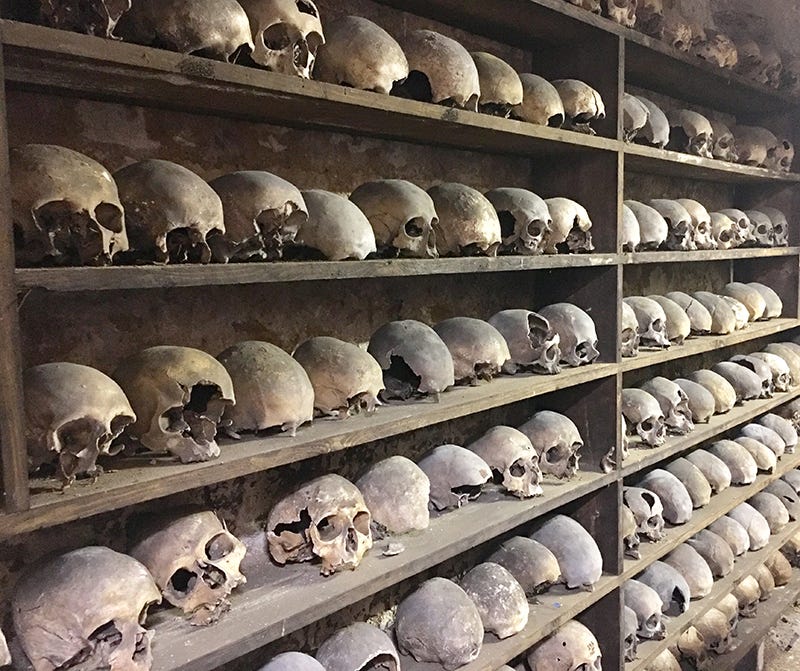
Most people step into a parish church expecting quiet pews, stained glass, and the usual stillness of an old English building. Holy Trinity Church in Rothwell certainly has that, yet it keeps something older tucked away beneath the floor. Down there sits one of Britain’s only surviving medieval bone crypts: a small, cool chamber holding the remains of roughly 2,500 people, placed there from the 1200s onwards.
It is not a site meant to startle. The atmosphere is steady and reflective, and the bones seem to rest in a kind of long, patient silence. Standing among skulls and long bones stacked with careful intent, it is difficult not to think about the people they once belonged to, or the beliefs that shaped their final journey.
A Medieval Answer to a Medieval Problem
By the high Middle Ages, many small churchyards were already running out of space. Over time, parish plots filled far quicker than anyone imagined. The same few yards of soil were used again and again, and eventually the older burials had to be lifted to make room for new ones. In Rothwell, those remains weren’t discarded or taken elsewhere. They were gathered together and carried below the church, kept on consecrated ground, and still looked upon as part of the parish rather than something to be lost or abandoned.
For generations the crypt played a quiet part in local devotional life. People knew it was there, and many would have paused to say prayers for the souls resting below. That changed sharply during the Reformation. Long-standing customs around remembrance and intercession faded or were swept aside entirely, and the crypt, like many others, slipped out of everyday use.
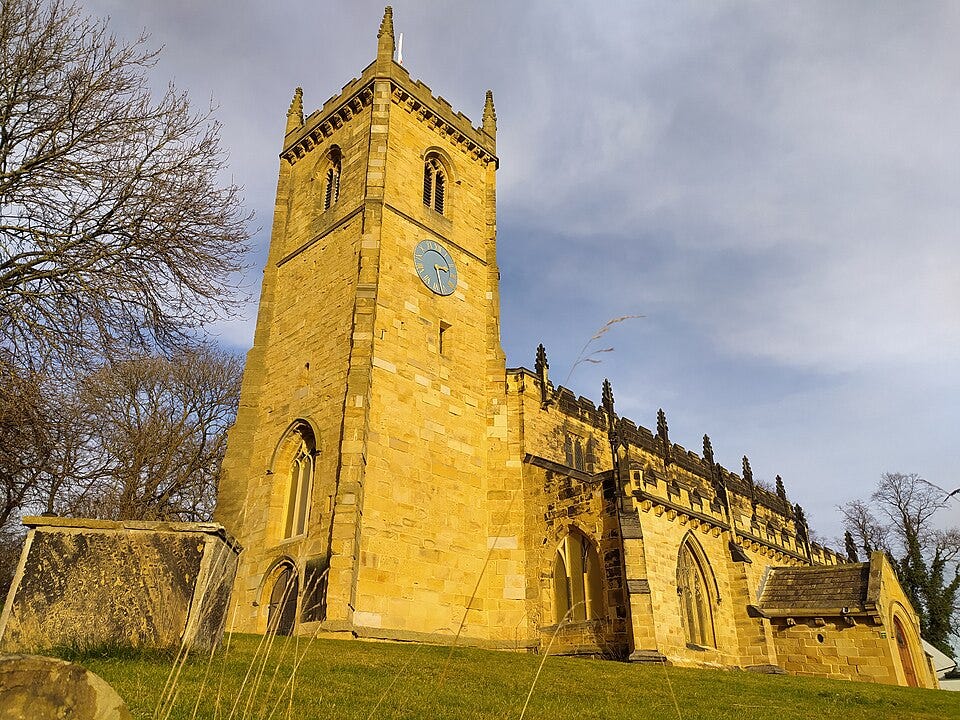
By the eighteenth century the village had forgotten it altogether. Its rediscovery came when a gravedigger accidentally broke through the ceiling and revealed a hidden room no one had spoken of for generations. What followed was the slow return of a long-buried chapter in the church’s history.
Descending into the Crypt
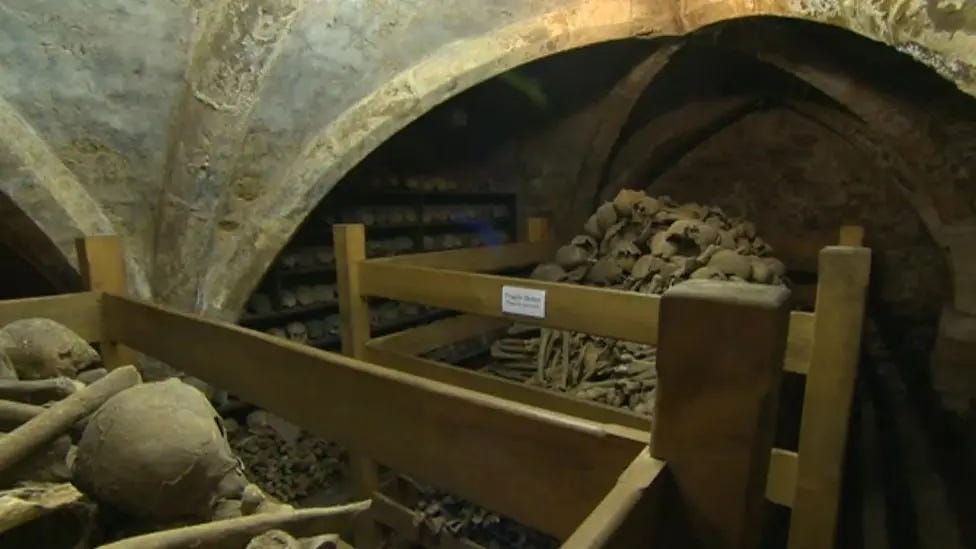
Visitors now reach the ossuary by a narrow spiral staircase. The light dips away with each turn, and the air cools noticeably. At the bottom sits a low stone room lined with shelves of skulls. Long bones rest in neat wooden frames, their order giving the whole space a sense of calm rather than anything chaotic.
A faint earthy smell lingers — mostly stone, with a little dampness. Guides tend to speak quietly, not through superstition but because louder voices feel out of place. Many visitors describe a strange blend of calm and unease when they first enter. The people whose remains fill the room lived in the medieval town above, and seeing their bones laid out like this bridges the centuries in a way words never quite manage.
Legends, Theories, and the Archaeologists’ View
In time, the crypt gathered stories of its own. Some villagers believed the bones were plague victims. Others claimed they were long-dead soldiers from the English Civil War. A few thought the careful arrangements hinted at something ritual or mysterious.
Modern analysis gives a clearer answer. Research led by the University of Sheffield found that the individuals died of ordinary causes between the 13th and 16th centuries. There is no evidence of mass death or battle casualties. One detail stands out: blood-type comparisons revealed a strong match between the people in the crypt and modern Rothwell residents, suggesting notable continuity in the town’s population.
Why the skulls and femurs were preserved above other bones remains a point of discussion. Some historians connect it to old beliefs about bodily resurrection, though the evidence is mixed. Whatever the reason, the arrangement clearly reflects intention rather than chance.
Stories That Gather in Quiet Places
A room full of bones tends to invite folklore. Visitors sometimes mention odd things: a sound without an obvious source, a shadow that shifts unexpectedly, or the sense that someone is standing just behind them. There is nothing in the crypt’s verified history to suggest ghostly events, but a space like this changes how the mind works. Surrounded by so many reminders of past lives, the imagination has room to move.
The power of the crypt does not rely on the paranormal. Its value lies in its authenticity and the way it reveals how medieval communities understood death, memory, and the spiritual world.
A Sacred Space in the Present Day
The church still treats the crypt with steady respect. A small group of volunteers look after it and guide visitors who want to understand its story or simply enjoy a few quiet minutes away from the outside world. Researchers visit as well, slowly adding to our understanding of the people who used the space centuries ago. Without this continued care, much of that knowledge might easily have faded once more.
The crypt is more than a curious survival. It shows how closely medieval communities felt connected to their dead, and how those ties shaped local life. Standing there, it is easy to sense a long thread leading back through generations of parish history. It encourages visitors to pause and think about all those who lived and worked in Rothwell before us.
A Quiet Closing Thought
The bone crypt does not try to draw attention. It reveals its meaning gradually. The people whose remains rest there were ordinary villagers, but the way they were gathered and remembered gives the chamber its quiet presence. For anyone interested in England’s older layers of history, or the places where folklore and faith occasionally meet, this small room beneath Holy Trinity is one of the more quietly affecting sites to explore.
References (Light & Credible)
Books & General Sources
• Paul Binski, Medieval Death: Ritual and Representation (University of Chicago Press, 1996).
• Roberta Gilchrist, Medieval Life: Archaeology and the Life Course (Boydell, 2012).
• British Archaeology — various issues covering charnel practices and medieval burial traditions.
Rothwell-Specific Research
• University of Sheffield – Rothwell Charnel Chapel Project (public summaries and reports).
• Jennifer Crangle, research work on the Rothwell ossuary (University of Sheffield public engagement releases).
• Holy Trinity Church, Rothwell – official visitor leaflets and interpretation material.
Richard Clements – The History Alchemist
Exploring the mysteries that history leaves behind.